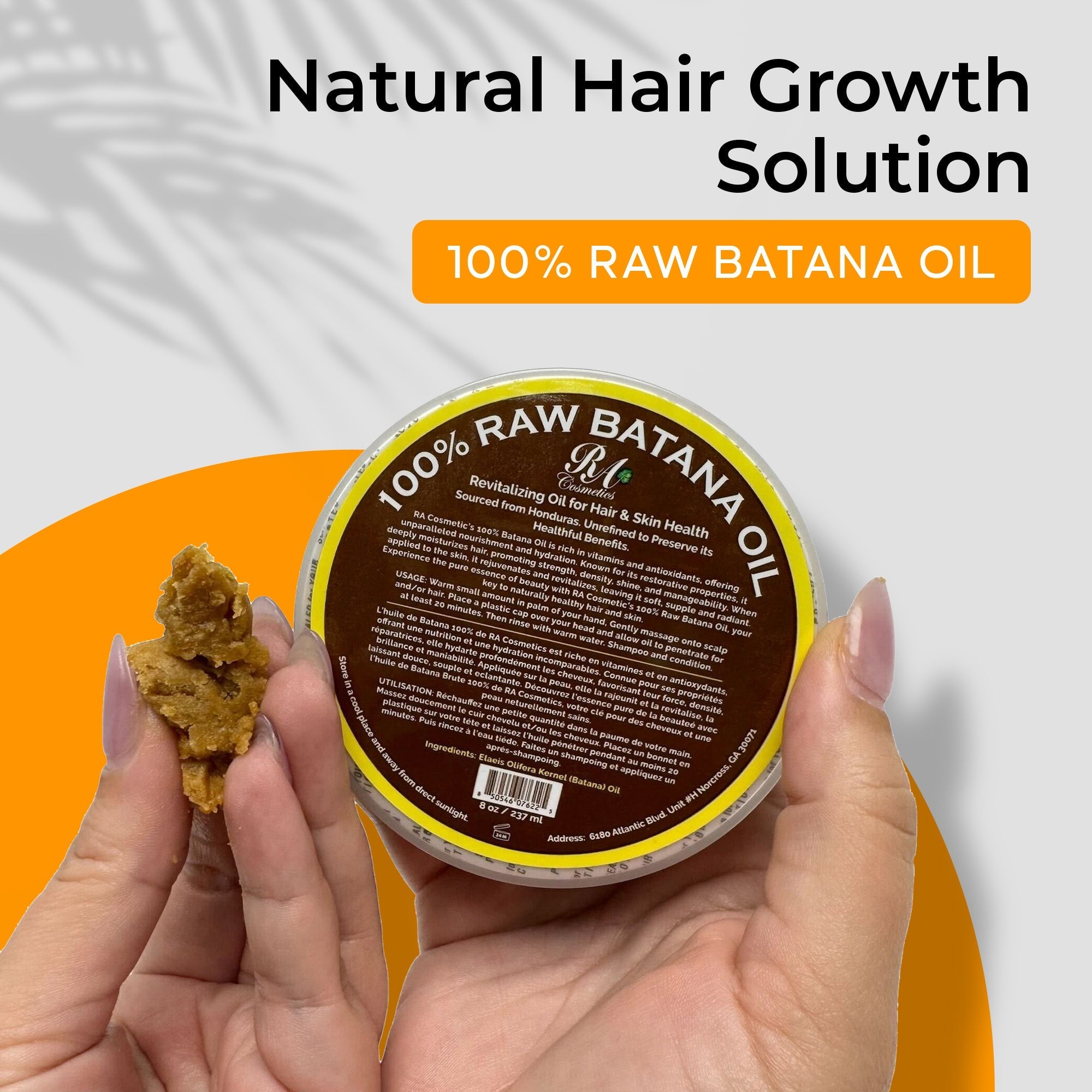

🌿 Raw Batana Oil vs. Cold Pressed Batana Oil: What’s the Difference?
, by RA Cosmetics Administration, 4 min reading time
, by RA Cosmetics Administration, 4 min reading time
When it comes to natural hair care, not all oils are created equal—and Batana Oil is no exception. If you’ve seen both Raw Batana Oil and Cold Pressed Batana Oil, you might be wondering: which one is better for my hair?
The truth is—they’re both powerful, but they serve slightly different purposes.
Let’s break it down.

Raw Batana Oil is made using a traditional roasting process. The nuts are roasted, then processed into a rich, butter-like oil that solidifies at room temperature.
This is the most traditional and unrefined form of Batana Oil—deeply rooted in Honduran beauty practices.
👉 Think of it as a hair repair treatment.

Cold Pressed Batana Oil is extracted without heat, preserving more of the oil’s natural nutrients in a lighter, more fluid form.
It’s smoother, easier to apply, and absorbs quickly into the hair and scalp.
👉 Think of it as your everyday hair oil.
| Feature | Raw Batana Oil | Cold Pressed Batana Oil |
|---|---|---|
| Texture | Thick, butter-like | Lightweight, liquid |
| Processing | Roasted (traditional) | No heat (cold pressed) |
| Best For | Deep repair + moisture | Daily use + scalp care |
| Absorption | Slower, more intense | Quick, lightweight |
| Use | Treatments, masks | Daily styling, scalp oil |
👉 Choose Raw Batana Oil if you:
👉 Choose Cold Pressed Batana Oil if you:
For best results, many people use both:
This gives you the perfect balance of repair + maintenance
At RA Cosmetics, we source Batana Oil with a focus on quality, tradition, and effectiveness. Whether you choose raw or cold pressed, you’re getting a product designed to work with your hair—not against it.
There’s no “better”—just what your hair needs.
Once you understand the difference, you can build a routine that truly supports healthy, thriving hair.